
Securing key habitats for the Kashmir gray langur, Pakistan
Conservation focus:
Kashmir gray langur
Scientific name:
Semnopithecus ajax
Scientific classification:
Mammals, primates, cercopithecidae
IUCN status:
EDGE status:
EN (Endangered)
Not listed
Threatened evolutionary history:
Not defined
Conservation priority by EDGE rank / ecosystem


Why it matters
This high altitude arboreal folivore and seed disperser functions as a keystone species in Himalayan temperate forests. The population in Pakistan is confined to Kaghan Valley, some 150 km from the nearest populations in India, and was only recently confirmed to be Semnopithecus ajax. We conisder it important to safeguard the Pakistani population of this very rare species. Extinction starts at the level of individuals, then populations disappear one by one. The Kashmir gray langurs in Pakistan are under growing pressure from habitat loss and fragmentation. Time to start protecting them through this grassroots project.
Project fast facts
Focal species' population trend
Decreasing from 1400 - 1500 individuals, severely fragmented (15-20 subpopulations)
Local conservation attention
High (India), Low (Pakistan)
Range / Project area

Ecological role
The Kashmir gray langur is a key arboreal folivore and seed disperser in Himalayan temperate forests. It contributes to forest regeneration and maintains ecological balance. As a forest-dependent primate with a highly restricted and fragmented distribution, its decline would significantly affect ecosystem structure and biodiversity integrity in the western Himalayas.
Threats
The Kashmir gray langur in Kaghan Valley is under growing pressure from habitat loss and fragmentation. Logging, fuelwood collection, road building, and expanding settlements are breaking forests into smaller, disconnected patches, limiting canopy routes the species relies on. Tourism and livestock grazing are also degrading habitat quality and reducing food availability. As resources decline, langurs are increasingly moving toward agricultural areas, which is starting to create tension with local communities. At the same time, the Himalayas are highly vulnerable to climate change, and events like recent floods and wildfires are adding further stress. With already small and fragmented populations, the species is especially sensitive to these changes. Limited conservation efforts on the ground, along with a lack of community-based mitigation, continue to increase the risk of long-term decline.
Grant
First awarded:
$ 11,200
8 May 2026
Not listed
Programme owner
Khyber Nature Society; Khyber Pakhtunkhwa Wildlife Department
Programme contact
Abid Ali
Project location
South Asia, Pakistan
Kaghan Valley, Balakot, Pakistan
Addressing the need: Project goals
Secure key habitats of the Kashmir gray langur in Kaghan Valley through a community-based approach.
To secure key habitats, we will validate and prioritize important habitat patches and movement corridors, identify high-risk areas for the species, engage communities, and develop a conservation action map.
Conservation actions
This project will improve conservation of the Kashmir gray langur in Kaghan Valley by securing priority forest habitats and reducing key human-driven pressures. Field validation will generate site-specific data on langur distribution, habitat use, and corridor connectivity, enabling targeted protection of critical forest patches. As a flagship and umbrella species, conservation of langur habitat will also support a wider range of Himalayan flora and fauna dependent on these forest ecosystems. Identification of high-risk zones will guide mitigation of logging, grazing, and tourism disturbance. Community engagement will strengthen local stewardship and promote coexistence through practical, non-harmful measures. Success will be reflected in clearly identified conservation zones, reduced disturbance in priority habitats, and active involvement of local stakeholders, with coordination from the Wildlife Department supporting continuity beyond the project period.
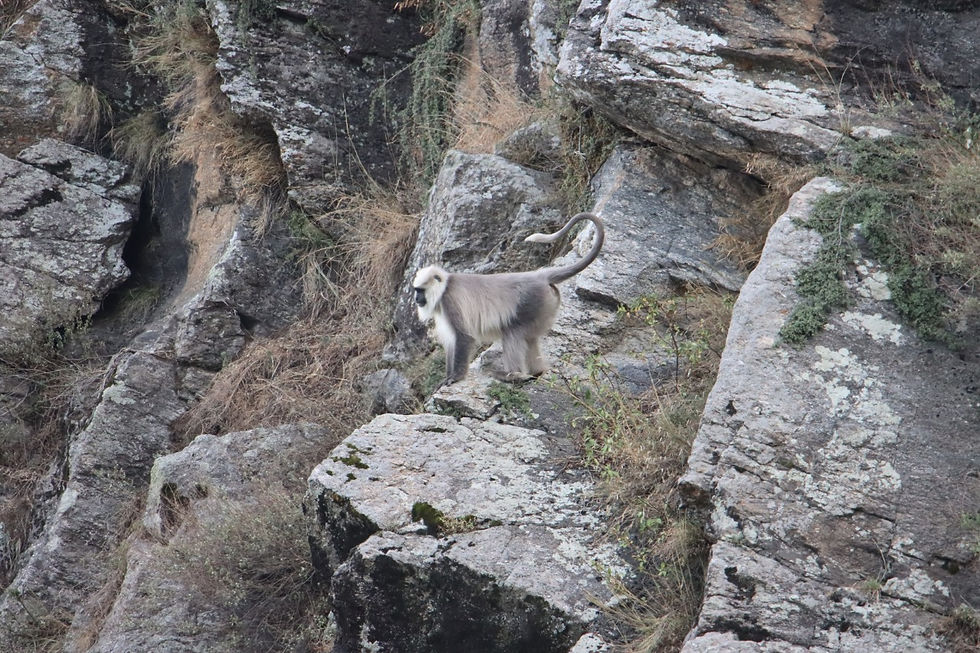
This langur species in Pakistan was only recently confirmed to be Semnopithecus ajax.
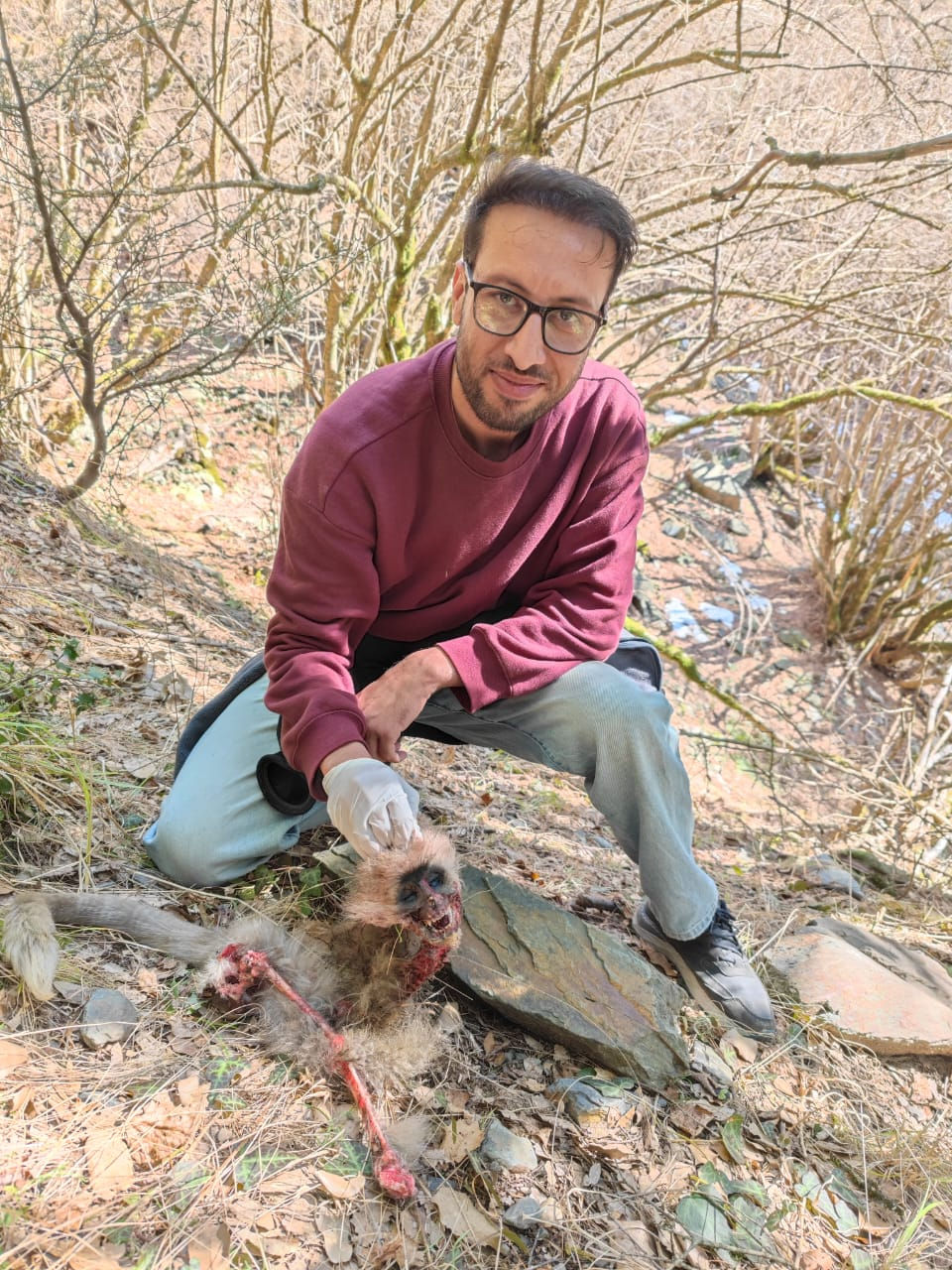
Kashmir gray langurs are a keystone species of Himalayan temperate and alpine forests.

Community-based conservation is key to project success.
This langur species in Pakistan was only recently confirmed to be Semnopithecus ajax.