
Saving the last populations of Philippine cockatoos
Conservation focus:
Philippine cockatoo
Scientific name:
Cacatua haematuropygia
Scientific classification:
Birds, Psittaciformes, Cacatuidae
IUCN status:
EDGE status:
CR (critically endangered)
Score 8.2, Rank 43 / 662 EDGE birds
Threatened evolutionary history:
8.9 million years
Conservation priority by EDGE rank / ecosystem


Why it matters
Katala Foundation aims to secure and restore one of the last populations of the Katala (Philippine Cockatoo), a critically endangered, top 50 EDGE bird which plays a crucial role as an ecosystem engineer. Its total population is estimated to range between 820 and 1,280 birds, some 70%-85% of which live in the four project sites initiated by and managed with assistance of Katala Foundation.
By the mid-1980s only small remnant populations of this species were left, most of them in the Palawan region. Habitat loss, poaching for the pet trade and persecution as "agricultural pest" had crushed most of the populations of this beautiful bird.
Monitoring its old nesting trees, as well as the potential designation of large swaths of lowland forest as a Critical Ecosystem, will allow the last remnants of this species to recover on Palawan island, a global hotspot of both biodiversity and endemism. Katala Foundation also engages in the protection of several other endangered EDGE species, including the Palawan pangolin and the Palawan (Philippine) Forest Turtle.
Project fast facts
Focal species' population trend
Increasing only in 3 locations with protective measures
Local conservation attention
Low overall, high locally
Range / Project area

Ecological role
This species is an ecosystem engineer. It modifies nest cavities and opens up decaying wood, thus enabling access for other species. It is also a vehicle for seed dispersal. It carries seeds away from mother trees and drops some intact during feeding.
Threats
Key threats include the destruction and degradation of lowland forests, poaching for the pet trade, and climate change as well as extreme weather events.
Logging has removed most tall, old nesting trees – especially in the species’ coastal lowland habitat. This left only 4 viable subpopulations, all in the Palawan archipelago.
Typhoons also destroy trees with nesting cavities and food plants. Severe droughts lead to food shortages.
Grant
First awarded:
€ 15,000 (2025-2026)
19 May 2025
Score 8.2, Rank 43 / 662 EDGE birds
Programme owner
Katala Foundation Inc. (KFI)
Programme contact
Dr. Peter Widmann

Project location
Philippines, Palawan
Casuy Road, Puerto Princesa City, 5300 Palawan, Philippines
Addressing the need: Project goals
This project aims at recovering the Philippine Cockatoo subpopulation and protecting its habitat on the area of Iwahig Prison and Penal Farm (a "prison without walls") through intensive nest monitoring, SMART patrols, the creation and management of a protected area, conservation education, applied research, and advocacy.
Our target is a 10% increase in the number of breeding pairs of the "Katala", a critically endangered, endemic cockatoo species. We also aim to establish a Critical Habitat designation which would protect about 15'000 ha (150 km2). To effectively addresses current threats, which our SMART patrols document on a monthly basis, we will identify key members of a management body for this protected area. Moreover, an education campaign including at least 12 community visits and a Katala festival are designed to improve awareness of this and several other threatened endemic species living in the area.
Conservation actions
Increase the number of Philippine cockatoo breeding pairs at the project location by at least 10% by 2027 (up from 9 average breeding pairs from 2023-2024).

Photo © Peter Widmann, Katala Foundation.jpg
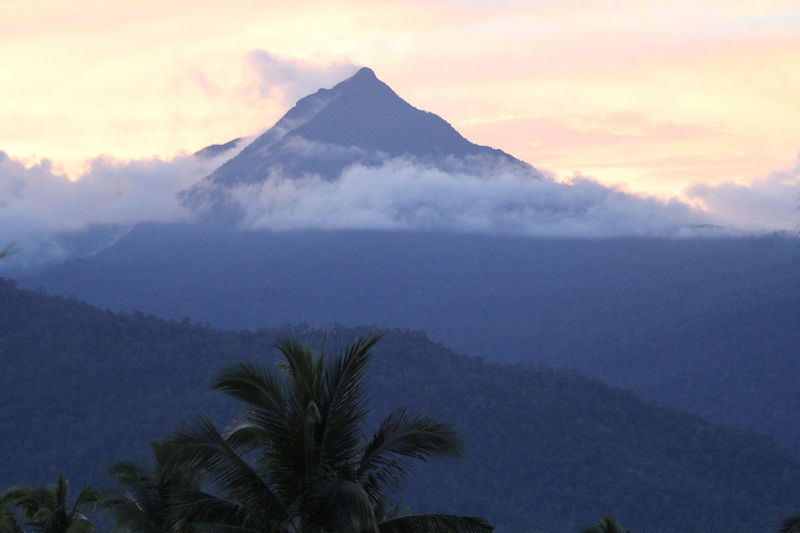
A scenic view of lowland forest in the Iwahig region.

Logo of Katala Foundation, Philippines
Photo © Peter Widmann, Katala Foundation.jpg